
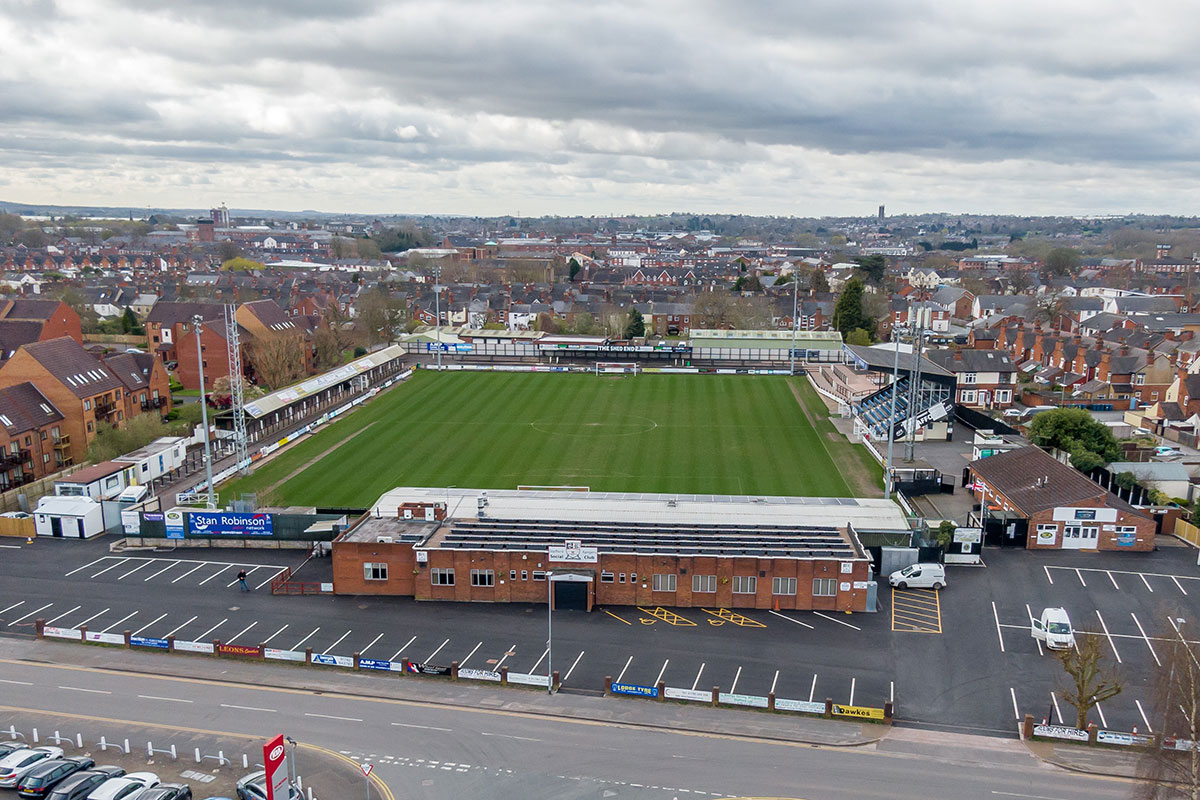
Stafford Rangers have called Marston Road home since 1896, now proudly known as the Stan Robinson Stadium. As a club-owned venue, the stadium combines heritage with independence while offering modern facilities including hospitality areas, function rooms and versatile event spaces used throughout the year. It remains a place where the Stafford community gathers and looks ahead together.
Founded in 1876, Stafford Rangers Football Club is one of the oldest clubs in English football, with roots stretching back nearly 150 years. For generations the club has been part of the fabric of the town, bringing people together on matchdays, creating memories for families and providing a platform for local talent and ambition.
Across its long history, Stafford Rangers has earned a reputation as a true non-league giant. FA Trophy victories in 1972 and 1979, alongside three memorable trips to Wembley, stand as defining moments that continue to inspire the club’s ambition today.
Believed to have been founded around 1876, much of the early history of the club is recorded in a book, ‘The Cinderella Story’ written by former Chairman Paul Butters (1972).
Playing mainly friendlies and cup games, Rangers reached the 1st Round of the FA Cup in 1884/85 and again the following season but they found success limited in those early years.
They moved to their present Marston Road venue in 1896, changing at the nearby Albion Pub, the ground became known as the Albion Ground.
Bizarrely, Rangers fielded two sides in two separate leagues in 1900/01 after they joined the Birmingham League and their resignation from the North Staffs and District League was rejected.
In 1904/05, Rangers enjoyed a memorable run in the FA Cup, reaching the Sixth Qualifying Round before losing out to 2nd Division Blackpool in a replay.
The club won its first League title, the Birmingham Combination in 1912/13, and were runners up on a couple of occasions but their first ‘Golden Era’ came in late 1920’s as they won the Birmingham League (1926/27), came runners up twice (1928/29 & 1929/30) and third twice. During this five year period, 542 league goals were scored with Eddie Cameron scoring more than 150 of them.
In contrast, the 1930’s proved a constant battle for survival both on and off the pitch. Player shortage forced Secretary RP Brown to play in one match (scoring the goal that earned their first away point of the season at the 14th attempt) and, in April 1935, only a successful appeal to pay creditors enabled them to continue.
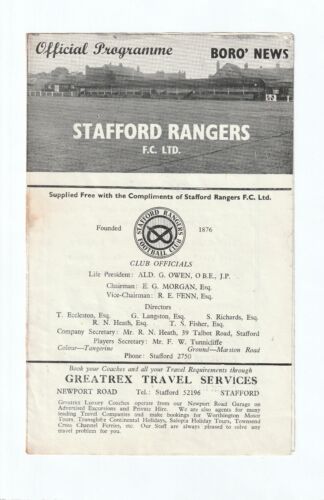
After a break for the Second World War, Rangers resumed action in 1946/47 playing in the Birmingham Combination.
A controversial move was made to the Cheshire League in 1952/53 but, apart from a Cheshire League Cup final appearance in 1954, the struggles continued.
Although another highlight came in 1958 when Rangers set a club record 11-0 victory over Dudley Town in the FA Cup. Les Box set an individual scoring record with 7 goals.
The 1960’s were also a time of struggle and once more the future of the club was in doubt.
Only the generosity of Chairman Eric Morgan ensured their future as crowds dropped to around 200.
The appointment of Colin Hutchinson as manager in 1966 marked an upturn in the club’s fortunes, winning the Cheshire League Cup in 1968 and promotion to the Northern Premier League a year later.
The 1970’s brought in the second Golden Era. Manager Roy Chapman led the club to a historic treble of NPL title, FA Trophy (3-0 v Barnet) and the Staffs Senior Cup while Ray Williams broke Eddie Cameron’s goalscoring record with 48 goals.
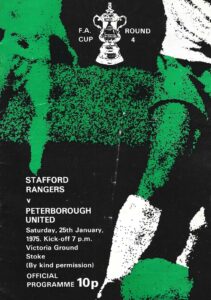
In 1974/75 Rangers defeated Stockport, Halifax and Rotherham on their way to the 4th round of the FA Cup before going out to Peterborough in front of 31,160 at Stoke’s Victoria Ground. The 3rd round tie v Rotherham had attracted a record Marston Road gate of 8,536.
The Centenary was celebrated the following season but it was a year of near misses as Rangers were runners up in the NPL, the FA Trophy and the Staffs Senior Cup. The club also experienced European football, playing against Monza & Udinese in the Anglo Italian Tournament.
In 1979, Rangers won the FA Trophy for the second time beating Kettering 2-0, the match setting a record gate for the final (32,000).
Rangers struggled in the newly formed Alliance Premier League and were relegated back to the NPL in 1983. Manager Ron Reid led the club to a record 20 games unbeaten and the NPL title in 1985 and won the Bob Lord Trophy the following season.
Rangers achieved their best ever Conference finish (6th) in 1988 but life was largely a fight against relegation, despite the likes of future internationals Stan Collymore (England) and Paul Devlin (Scotland) making their names at Rangers.
Dennis Booth matched the 6th place finish in 1993 and took the club to the 2nd Round of the FA Cup with victory over Lincoln City.
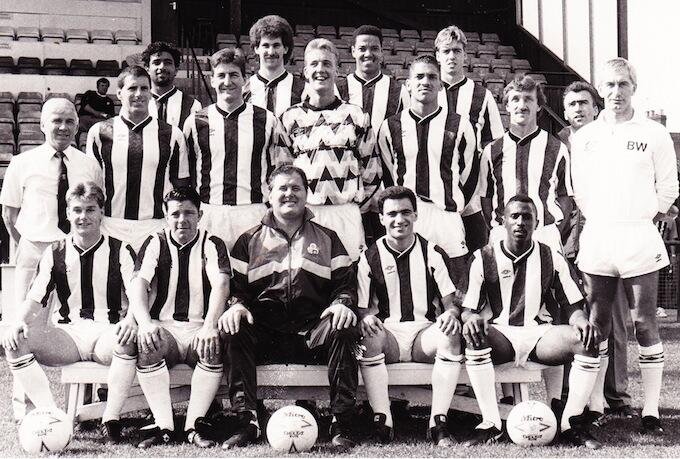
Relegated from the Conference in 1995, a second consecutive relegation followed as Rangers never recovered after picking up just two points from their opening 19 games in the Southern Premier League.
Rangers bounced back in 1999/2000 as Ian Painter led the club to the Dr Marten’s League Western Division title, setting a new club record of 23 unbeaten league games in the process. Another club record was broken as Kidsgrove Athletic were beaten 15-0 in the Staffs Senior Cup in 2001/02.

Phil Robinson replaced Painter and the club finished Southern Premier runners up in his first year (2002/03) as well as winning the Staffs Senior Cup and taking the club to the 1st Round of the FA Cup for the first time in a decade. The following season, Rangers finished 3rd and qualified for the newly formed Conference North.
After topping the table for much of the 2005/06 season, Rangers eventually finished runners up but won promotion back to the non league top flight thanks to a Play Off victory over Droylsden.
In the 2006–07 season the club reached the second round of the FA Cup where they lost to Brighton & Hove Albion.
A match against Dagenham & Redbridge was featured live on Sky Sports.
Goalkeeper Danny Alcock was selected for the England Non-League squad in January 2007 and a month later Cameroonian Guy Madjo was selected by his nation for international duty.
The club managed to avoid relegation on the final day of the season, and finished 20th in the Conference.
Rangers’ stay in the Conference Premier lasted two seasons before they were relegated back to Conference North, but the cost of Premier football lingered and the future of the club was in doubt once more.
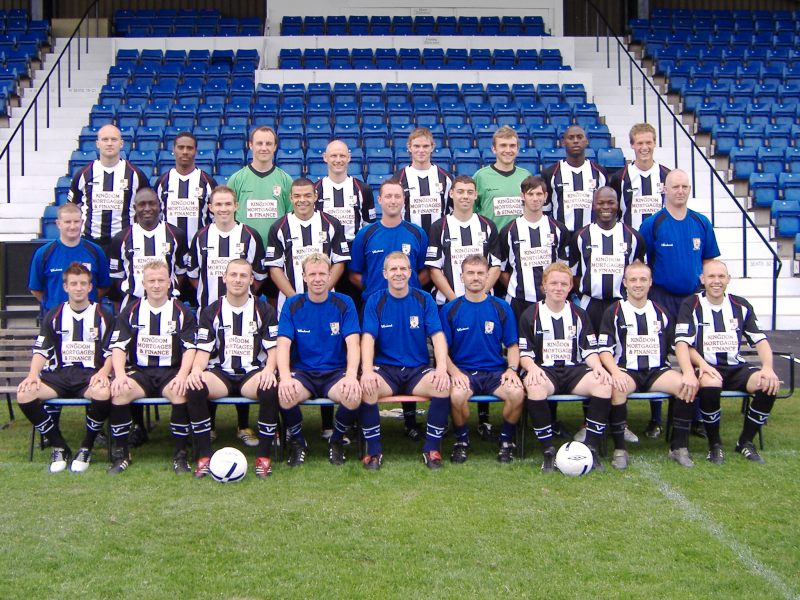
The appointment of big name managers such as Steve Bull, Tim Flowers and Matt Elliott failed and Rangers dropped to the third tier of the pyramid, returning to the NPL for 2011/12.
Two more disappointing years followed under the leadership of Greg Clowes. Another big name appointment, Andy Mutch, also failed and his replacement, Graham Heathcote, couldn’t save the club from relegation.
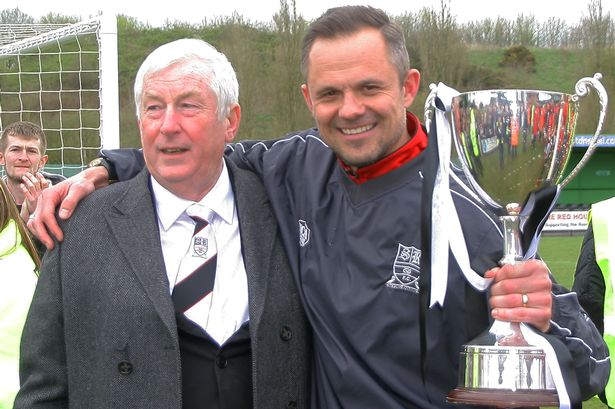
Neil Kitching arrived during the summer of 2014 but the club was rocked on the eve of the new season by the sudden death of Secretary and Director Mike Hughes who had helped carry the club through the rocky times.
In his first season in charge, Kitching lifted the Staffs Senior Cup and in the following season he guided Rangers to the Division One South title.
2016/17 season failed to produce any silverware as Rangers lost in the final of the Walsall Senior Cup. In the league, Rangers fell just short of making a push for the play offs, eventually finishing 13th. It was a similar story in 2017/18 with inconsistencies resulting in a 13th place spot. As the campaign entered its final month, Kitching & assistant Nick Amos announced they would leave the club at the end of the season. They signed off in style with a Staffs Senior Cup win against local rivals Hednesford Town.

In May 2018, former Rangers striker Steve Burr was announced as Kitching’s replacement but, after a series of disappointing results Burr resigned just after Christmas.
He was replaced by the duo of Andy Fearn and Alex Meechan who stepped up from their respective roles of Assistant and Coach. The new team stabilised the ship, achieving a 14th place finish and winning the Staffs Senior Cup by beating Rushall Olympic 3-0.
Unfortunately they were unable to build on this and the club was facing relegation until the Covid pandemic forced the suspension of the 2019/20 season.
Jody Banim had a short unsuccessful reign as manager for the start of the 2020/21 campaign. With just one point won from the opening seven games, Banim was sacked.
Matt Hill stepped up from his playing duties to take temporary charge. Just two games into his spell, the season was suspended by Covid once more.
Hill was permanently appointed for the 2021/22 season with Dale Belford as his assistant.
The duo were able to quickly assemble a strong side that immediately competed in the top half of the table to many peoples’ surprise.
The good form continued throughout and the side finished 8th in their first season with Hill winning many plaudits for his efforts and personable manner.
This was maintained for much of their second season in charge and although inconsistent at times, a creditable 12th place was achieved.
With Rangers bottom of the table in his third season, Hill was replaced in October 2023 by Dave Cooke.
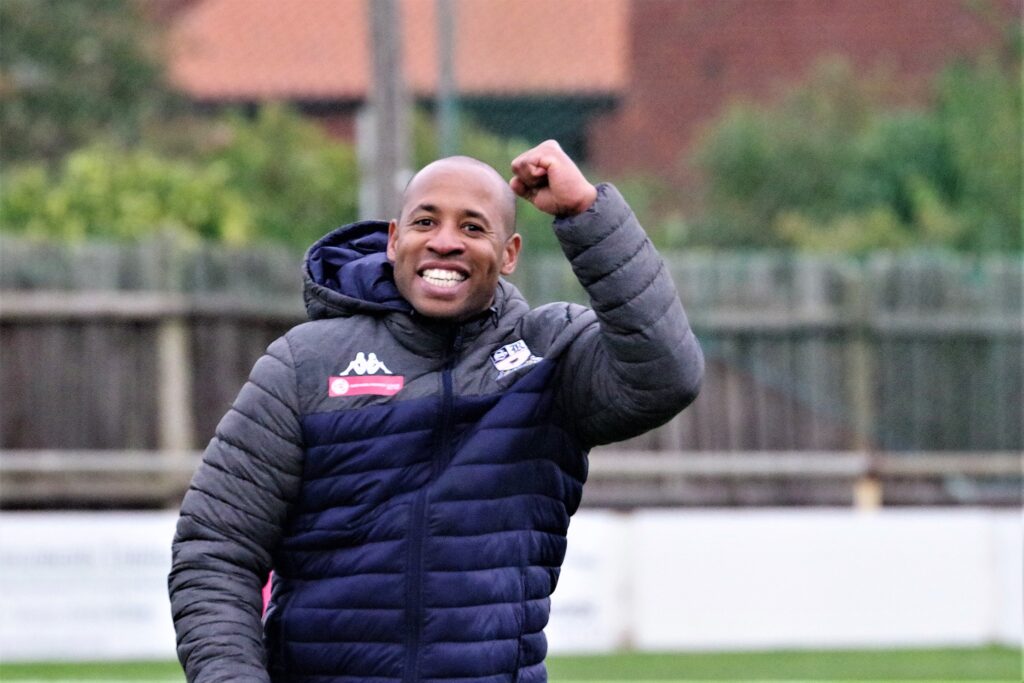
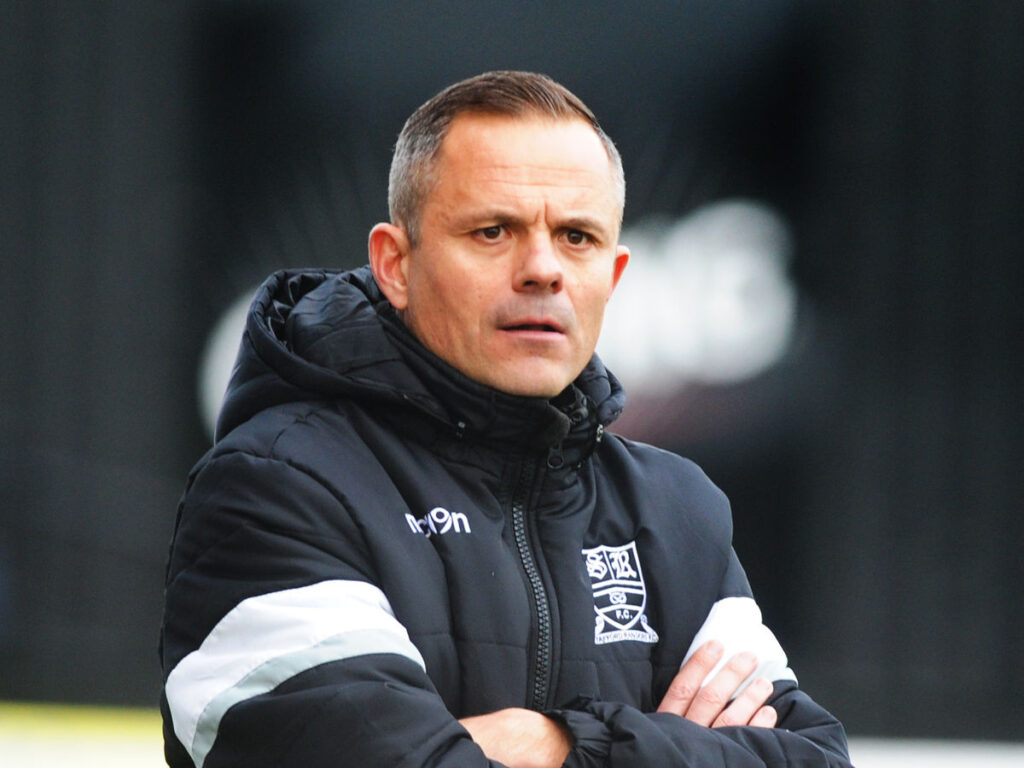
The former Nantwich man was unable to prevent relegation to the NPL Division One West and with no signs of improvement in the lower tier, Cooke resigned at the end of September 2024.
His replacement and former assistant, Dale Belford had a short tenure before departing in January 2025 to open the door for the return of fans’ favourites, Neil Kitching and Nick Amos.
Unfortunately, their return didn’t prove to be a successful one. Although the club survived relegation in 2025, they found themselves struggling again in the following season.
A thumping 6-1 defeat at Nantwich on New Year’s Day proved to be the last for the management team.
Coach Graham Deakin was appointed to the end of the season. Meanwhile, things began to happen off the field as two US based investors became involved.
First on the scene was George Bruneau – he and his family retained interest despite watching the Nantwich debacle – closely followed by Nathan Owen, a man now settled in the US although his roots were very much in mid Staffordshire.
A vote at the April AGM gave the club the go ahead to proceed with proposals to invest a seven-figure sum into the club, with plans for developing the ground, the footballing infrastructure and the comunity setup.
On the field struggles continued but a late rally saw Rangers secure their NPL Division One status with a game to spare.
The summer of 2026 saw Graham Deakin appointed as full time manager. In addition a management team was also created, ground improvements were made and a number of high profile signings made which added fuel to the increasing optimism for the future of Stafford Rangers FC.